
Louis and I are thrilled to live in Czechia. There are 12 nations in Central Europe, and it is in the center. It is rated highly for globalization, prosperity, democracy, and education. Central Europe is one of world's safest regions. There are 195 nations in the world, and this year's Human Development Index ranked Czechia "very high" at #32. On the Global Peace Index, Czechia is #11, after Austria and Switzerland.
We reside in the capital, and I will show you that Prague is full of bountiful pleasures. As we got acquainted with Praguers, everybody pronounced our names correctly... and that was nice because it rarely happened during our lives in the USA. I have a German last name, and Czechs know how to say it because it is a neighboring nation, so they have awareness. Louis' name translates easily into many languages, and it is Ludvík in the Czech language... but everyone says Louis because that's what it is. I will forevermore type his name as "Louis". That is how his name is truly spelled. Years ago, he disliked how Americans mispronounced it as Louie or Lou, so he decided to spell it as Lewis to assure accuracy. Nobody mispronounces his name in Prague, so he is happy to spell his birthname correctly in our new nation. My named doesn't translate, so it remains as "Kenneth". (FYI: It originated with ancient Gaels to mean "handsome lord born of fire". "Lewis" has Frankish-Germanic origins to mean "loot-carrying warrior").
Louis and I emigrated from a cesspool-city that overbuilds hi-rises but neglects to include enough grocery stores, entertainment venues, greenmarkets, or parkland. To see where we lived in New York City, please use this link:
https://halfwindsorfullthrottle.blogspot.com/2020/09/walking-tour-of-our-new-neighborhood.html
We made our new home in a quintessential cosmopolitan metropolis: one of the best in Europe. Instead of being New Yorkers, we are now Praguers. It's official.
.jpg)


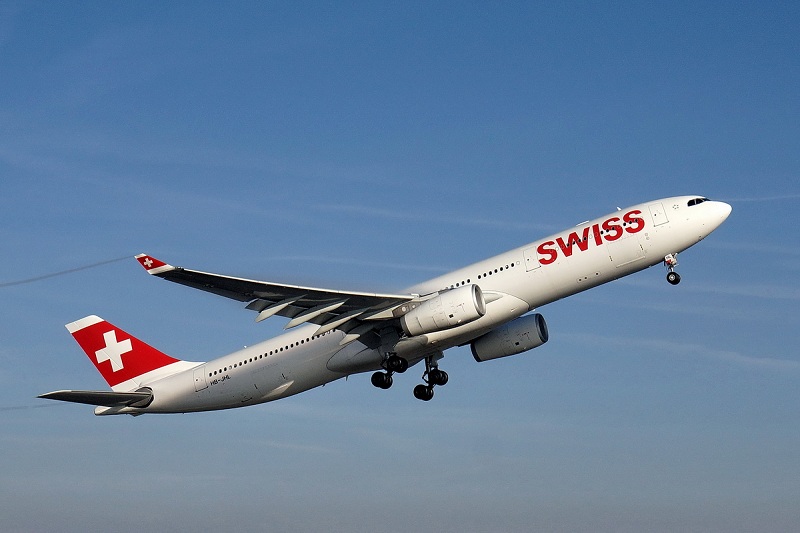
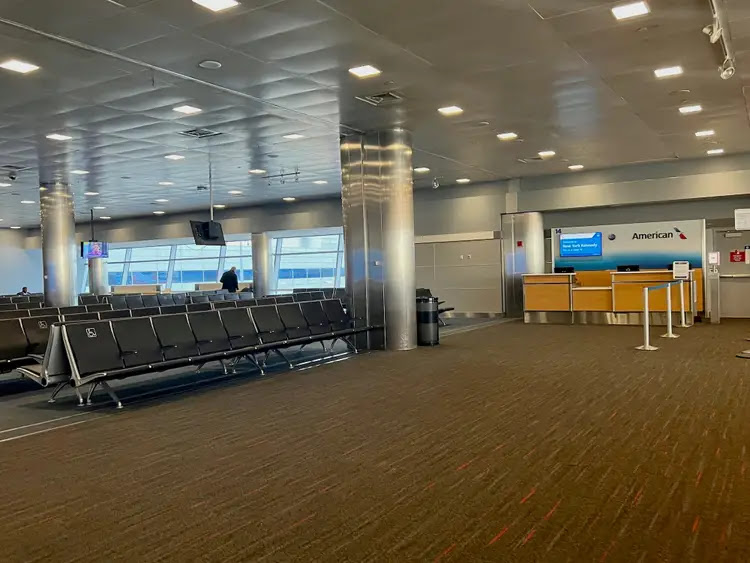
We emigrated from America by flying aboard Swiss Air from JFK Airport, which is outlandishly outdated since 1981. Avoiding delays and missed connections from KLM Airlines, we chose Swiss Air for its superior reputation, on-time performance, and efficient layovers. Swiss Air earned high ranking for punctuality and its dazzling hub in Zurich. Mercifully, it participates in America’s TSA Pre-Check: a program that citizens must pay extra for, so they can keep their shoes on during airport Security Checks, keep their belts on, keep their laptops and liquids safely in their luggage, and have a quicker queue. Despite charging its citizens for the program, America doesn’t make it mandatory for airlines to use it... so airlines must choose to (making it useless 50% of the time).
Our jet became airborne on-time.


_06.jpg)




.jpg)
We landed punctually at Prague's international airport. Its Security Screening and Arrivals areas were immaculate, efficient, courteous, and hugely superior to airports in NYC. We actually had a relaxing experience. A local man was amused that two Americans were awed with a simple thing like an efficient airport. Louis explained that they still don't exist in New York City: America's richest city.


Prague has the world's best public transportation! The transit system is named PID (in English, it means Prague Integrated Transport). Similar to London, you can buy tickets at a wide variety of stores—not only at transit stations. NYC lacks that modern convenience, so you can only buy tickets at transit stations. PID tickets give access to trams...

buses...


trolleybuses...

ferries (in greedy NYC, ferries are an additional cost)...


commuter railways (in greedy NYC, those are an additional cost),

Metro system...


.jpg)
bike-sharing program, and a funicular.


The PID sustains 548 routes with admirable modernity and efficiency. Notice the may loops that allow interconnected access between boroughs.

That is an achievement that American cities have not attained. Seen below, NYC's greedily-unhelpful subways resemble a drainage system designed to only funnel workers to Manhattan. It doesn't care about letting people get between boroughs.

71% of Prague’s population relies on public transportation. (NYC is choked by the worst traffic congestion in the USA, but only 54% of its people use public transit. That’s because America brainwashes its people to be car-centric, and NYC allowed its public transit to decay since it was installed).
In Prague, you can purchase tickets online via the app and email them to friends. That’s helpful if you have people visiting from out-of-town. The PID Litacka app also provides the locations of entrances to Metro stations—at both ends of the platforms! (NYC doesn’t have that technology). A Route Planner informs you of exact arrival times. It gives a detailed map—with moving icons of vehicles in real-time. When you type station names, it will auto-fill the choices. It helps you find various routes to all destinations in the city.


When you select a route, the map highlights it...

When Louis and I searched online for a home, we desired one near a Metro station or tram stop. The Metro stations brim with modernity, and all facilities are cleaned daily. (That still doesn't occur in America's richest city where passengers always wait in dirty environments). It takes effort to sustain, and we love it. Prague’s population is 1.3 million, while NYC’s is 8.9 million. Think about that. Prague has a smaller population, so it has less tax revenue… yet it outclasses NYC: the wealthiest city in America. NYC doesn’t care about having modern infrastructure for its people (it repeatedly embezzles the funds), but NYC demands higher taxes from its 8.5 million inhabitants and avoids upgrades to mass transit, airports, regional trains, flood prevention, roads, and electricity. Many trains are still from the 1970s! That is atrocious when you realize that 4% of all NYC Sales Tax is given to Commuter Transportation. It's appalling when you know that the transit authorities take tolls as revenue from 9 bridges and tunnels in NYC equaling $2.4 billion per year! Every month, NYC’s transit agency collects millions of dollars… yet it neglects infrastructure, stations, delays, subway trains, signage, broken elevators, a lack of air vents, a lack of handicap accessibility (despite decades of lawsuits), and electric signals from the 1930s. For its vast system, it only has 3 track-cleaning machines, but only one works. We are enamored with Prague because it invested continuously for amazing infrastructure.


It is on a hill overlooking meadows, lush countryside, and the Town of Řeporyje. British Quarter is situated in a new neighborhood named Západní Město (West City).

.png)
.png)
To provide convenience, West City was built around the Stodůlky Metro Station, which serves the B (Yellow) Route.


(Living beyond America, we can finally join the rest of the world using the Metric System. 820 feet = 250 meters).


.jpg)


The Capital City of Prague has 10 districts, and we are in Prague 5. This is its coat of arms and flag...
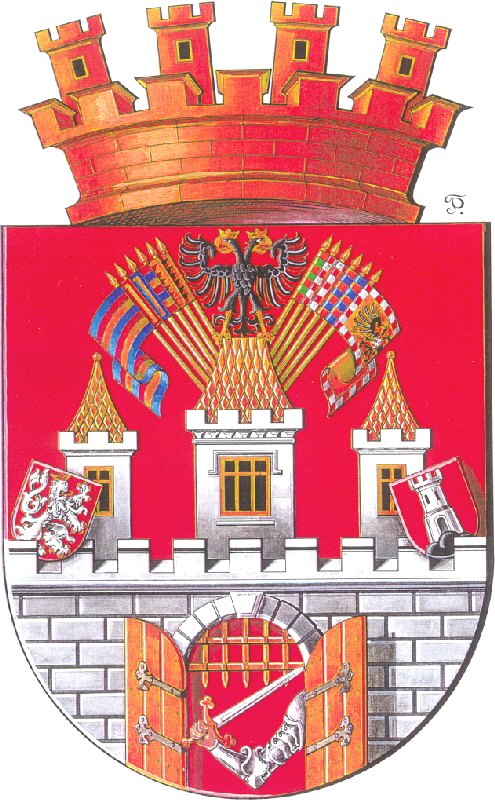

Since 2008, the district gentrified mightily from agricultural villages and industrial factories. Britská čtvrť (British quarter) is situated in a region named Stodůlky (Barns) because it was quaintly rural until the 1990s. Beyond our community, that serene landscape still exists.

The first mention of Stodůlky occurred in 1159. In 1429, it was owned by the Burgrave (Castellan) of Prague Castle. Now, it is brimming with “panel” housing estates, villas, and sleek apartment buildings. British Quarter seems to be the spiffiest complex. Banks and telecommunication companies moved their headquarters there, and the area's homes are highly desirable. Please use this link to see a short video about it: https://www.youtube.com/watch?v=Z6q9qw8r9HE
West City is the largest project of its kind in the Czech Republic. Within Prague 5, it belongs to Administrative District 13. This is District 13's coat of arms and flag…


(In NYC, our prior home was in the borough of Queens, and it was in City Council District 22).
When completed, the estimated population of West City will involve 24,275 residents in 12,253 apartments. In addition to private garages at apartment buildings, public parking will accommodate 400 cars—proving that Praguers rely on their excellent public transportation more than cars. We like that.
Builders had to abide by decrees from the Institute of Planning & Development, which undertook strong research and data collection. To prevent the type of mindless overdevelopment that tramples communities in America, Prague preserved its pristine qualities by authorizing the Institute to analyze technical infrastructure, transport, landscaping, local economy, public spaces, and affordable housing. The Institute involved locals so their opinions were priorities. Traffic studies warned of capacity restrictions, especially at intersections. In the USA, authorities don't care about that and overbuild without upgrades to infrastructure, causing citizens to be negatively impacted every day. In Prague, necessary modifications to intersections were implemented: adding traffic lanes, bike lanes, optimizing flow to highways, and traffic-signal management. Block delineation was crucial. Prague’s urbanist methods enabled the creation of commercial spaces in the vicinity, and bio-corridors were included.
West City has contemporary architecture, but it is diverse in style: blocks of office buildings, urban residential buildings, townhouses, and private houses with gardens. Being in Europe, it was natural that West City had a low skyline because low-rise buildings are sensible priorities for sunlight, preventing overdevelopment, and never overshadowing Life Happiness.
Urban planners were truly concerned with the hierarchy of public spaces. Authorities insisted that greenspaces must exist to accommodate the concentration of citizens. Respect for the “historical footprint" was strictly maintained. None of that happens in the vastness of the USA. In Prague, the Institute presented its findings at public meetings with the Center for Architecture & Urban Planning (CAMP). The City Council attended the meetings, with the Technical Communications Administration, Transport Authority, Office of Prague Services, and civic associations. If your community lacks that type of foresight planning, it may explain why it is a mess.
This is what West City (and British Quarter) looks like...


In stark contrast to that smartness, NYC was stupid, greedy, and cheap to build continuously and swallow all of the land for overdevelopment, and it didn’t care about preserving greenspaces for public parks. *Please use this link to see that https://halfwindsorfullthrottle.blogspot.com/2023/01/the-real-parks-of-new-york-city.html
In the 1980s, Prague anticipated residential growth, and it dedicated swathes of land for permanent greenery so that multi-purpose communities could flourish with Life-Work Balance. We live near Central Park, which is ironic because Louis was born on Manhattan's Upper West Side near NYC's Central Park. Prague's Central Park is one of 10 huge parks, and it encompasses 97 acres that provide hours of serenity.

It is accessible from three Metro stations, and it stretches east-west for 1.5 kilometers. Two large ponds are fed by the Prokopský Stream, which flows east to the Vltava River that sustains the capital.
.jpg)


The park contains the only section of elevated subway tracks in the region (begun by the Soviets), yet Metro trains are smartly ensconced in a sleek tube with hundreds of windows. The 375-meter tube stops noise pollution from disturbing residents. That is brilliant, and it's indicative of a caring city.
.jpg)
.jpg)
.jpg)
.jpg)
.jpg)
NYC was stupid, greedy, and cheap to build half of its subways on elevated tracks that trampled communities. *Please use this link to see that: https://halfwindsorfullthrottle.blogspot.com/2024/07/urban-planning-idiots.html
Central Park includes a picnic meadow, footbridges, playgrounds, outdoor fitness areas, mini golf, and pristine places for yoga. In many places, QR Codes are available so people can learn about their area.

.jpg)


In prior photos, you saw colorful "panel buildings". The first ones were built by Soviets during their regime in Czechia to provide affordable housing. They remain sturdy and well-liked, and all of them are painted with pastels to create bright cheeriness.
.jpg)


Newer ones share similar ideals, and all of them guarantee greenspaces for fresh air and public enjoyment.
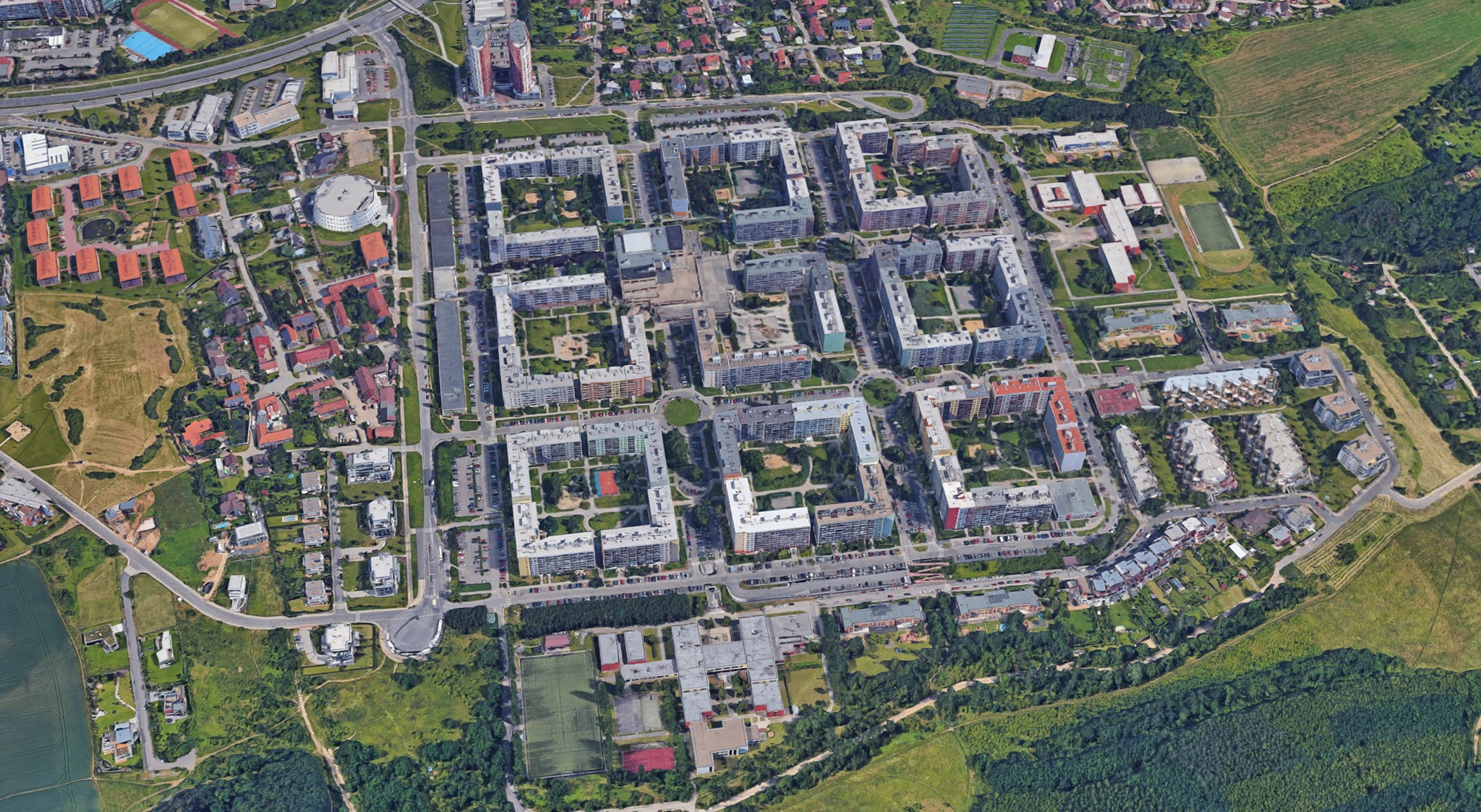
That is hugely better than Housing Projects in America, which doesn't care about its poorer people, as seen below...


Ancient Celts dwelled there and recognized it as a place of "good energy". They embedded a monolith stone as a form of acupuncture to preserve the positive vibes.

Several of those historic landmarks exist in Czechia. Known as Menhir sculptures, they are found in France, Spain, Corsica and the British Isles. They were erected from the late Neolithic era to the second half of the first millennium BCE.




Dm Drogerie is the local drug store/pharmacy.










Our bank has a branch there.

Across from Metropole, there is a Globus hypermarket.


From our home, if we ride the Metro one stop to the east, there is an Albert supermarket, which is directly across from the Metro Station (with a covered walkway).


After living for 40+ years in New York, we are grateful to finally live in a place that provides close-to-home access to quality. In NYC's "food swamps", good-quality grocers are rarely near public transportation, and it is almost impossible to find three high-quality supermarkets in one area. Prague is marvelous!
As I mentioned in my prior blog post, our apartment's previous tenant was nice to tell us about the electricity provider and TV/internet provider that he used. We liked that electricity provider, so he transferred the account to us. (Costs are already included in our rent as an approximation, and we may get a refund or pay more at the end of our lease). We also liked his TV/internet provider, and they have an office in British Quarter.
When I called Spectrum to cancel our TV/internet service in NYC, the billion-dollar telecommunications company did not invest in its infrastructure, so its system was pathetically slow and the employee needed 20 minutes to close my account! That's a long phone call. Then, the stupid man disregarded what I said (about moving to another country) and tried to offer me a lower-cost deal to keep me as a customer. He wasn’t paying attention to what I told him.
In Prague, Vodaphone outclasses anything in America and provides fiber-optic internet with speeds up to 10 Gigabits per second (Gbps). Their technology uses light to transmit data as fast as 70% the speed of light, 100-times faster than traditional copper cables. Data is more secure with fiber optic cables, which don’t carry electrical signals and are almost impossible to tap into. Fiber is immune to temperature changes, severe weather, and moisture, all of which disrupt the connectivity of copper cables.
You can guess that American conglomerates are too greedy and cheap to invest in that. Stupidly, whenever Spectrum installed service for a new tenant, they drilled holes in the apartment walls and stapled new cables along the ceilings and floors!


Yuck. It’s like cavemen or a third-world nation!
Despite that low-quality stupidity, Spectrum charges $87.99 per month for "high-speed" internet of only 300 Mbps, and it adds extra costs of $7 per month for WiFi… totaling $94.99 per month! That forced us to overpay $1,139.88 per year, plus taxes and surcharges of $4 per month (+ $48 per year). Making it worse in NYC, Spectrum warned its customers that “speeds may get reduced during peak use hours in the late afternoon and evening due to bandwidth sharing”. That’s pathetic for the year 2024! What are customer's paying for?
In Prague, Vodaphone provides 500 Mbps for 396 crowns ($16). Prague provided hugely better service than NYC, and it only cost $16 per month! That is $192 per year, instead of $1,187.88. Where would you prefer to live? Away from America's greed, things are priced fairly. That also explains why Czechia outranked America in the World Happiness Index.
Prague sustains a helpful organization named Integracni Centrum Praha (Prague Integration Center).

It has four locations—all conveniently near Metro stations. During our first time in Prague, we visited their main office in the city-center, near the National Museum. There is an office near our home: two Metro stops away. There are phone numbers and email address to communicate with English-speakers. All services are free. The staff provides advice and counseling about residing in the Czech Republic, assistance finding schools, jobs, or doctors, obtaining recognition of foreign education diplomas, information on social benefits in Czech society, and help getting a business license. The Center freely provides interpreters to accompany you to physicians, school enrollment, lease signings, or government appointments. It sponsors free cultural events, and it hosts free Czech language courses and seminars about life in Czechia. It has a mobile app, and information is clearly arranged according to topics—including everyday situations.
.jpeg)
Louis and I arrived in the cosmopolitan capital with our plucky "Can Do" attitudes and our American charm. We embody the likability of Bugs Bunny, tempo of John Philip Sousa, stamina of Lewis & Clark, gumption of Huckleberry Finn, decency of Mayberry's Sheriff Andy Taylor, ideals of Mayor LaGuardia, showmanship of Ella Fitzgerald in Harlem, urbanity of William Powell, charisma of Ellen Degeneres, pizazz of Queen Latifah, perseverance of Constance Wu, and the élan of George Clooney. We easily ingratiated ourselves with other Praguers.
We were nimble to start participating in Prague's events, and we have its monthly calendar bookmarked on our browser. Making things nicer, we were able to enjoy events in weather that was truly autumnal. Back in NYC, unstopped pollution keeps the temperature unnaturally hot in late-October... even at 18:00 (6pm) in the evening! It was 81-degrees (27 Celsius) in NYC, but seasonably 54-degrees (12 C) in Prague.


On 30 October, we joined Praguers at Manifesto Market’s numerous eateries to enjoy autumnal delicacies made with pumpkins: creamy pumpkin soups, pumpkin spice lattes, pumpkin pastries, chicken and pasta with pumpkin seed pesto, dumplings stuffed with rabbit and pumpkin, and pumpkin-flavored cocktails named Autumn Whisper.


On 31 October, Louis and I attended festivities at the Holešovice Tržnice (Food Stall Market) to celebrate Mexico’s Day of the Dead (Dia de los Muertos). That holiday is included on UNESCO's Intangible Cultural Heritage List. It reminded us of the Halloween that we had in Finland, where Finns had reverence at graveyards for their ancestors. In Prague, people had their faces painted like skeletons, Mariachi bands performed in traditional costumes, and Mexican cuisine was the specialty.


We are assimilating slowly into Czech society. We were told that Czechs may be slower to befriend us because they might wait and see if we are "fake".
Being a clean and sanitary population, Czechs are similar to Asians by removing their shoes when they enter a home. We do that, too. Most Americans keep their dirty shoes on at home—often putting them on their beds and furniture—so we are exceptional from them!

Please watch this short video from an American who relocated permanently to Prague; she explains it...
Louis and I started our new jobs, and we love the Life-Work Balance. Click these images to make them bigger/clearer...


During our orientations, we were notified that nobody should do overtime because it caused an imbalance in their life. We were thrilled with that rule. Coworkers warned us that Americans suffer from overworked mindsets and feel compelled to work at 2 or 3 jobs in Prague and do overtime... but nobody should do that. During our 40 years in the USA, no employer told us that! In civilized nations, nothing is critical to require overtime or having to work on weekends. We were told that Czechs never bring their work to do at home. In America, greedy employers command employees to do unpaid work at home, on weekends, and on holidays. Czechs are civilized, so they never do work during holidays or vacations, and they don't reply to emails or texts. Czech bosses don't send messages to employees during those times. Great!
*Making that better, Czechia's location facilitates travel during vacations! Click this image to make it clearer...

After being overworked for decades in America (the so-called Land of Freedom), I was giddy with joy when my boss told me that nobody should eat lunch at their desks, and all employees must enjoy a full lunch-hour. My prior job as a department manager at a corporate office in Manhattan only tolerated a half-hour lunch, and many overworked employees ate at their desks (not me). I was joyous when colleagues told me that they left the office every day to enjoy their lunchtimes; it was commonplace to eat at restaurants. You can't do that in NYC because overpriced eateries make it cost-prohibitive. Yet, the Capital City of Prague is full of good-minded restaurants that offer daily Lunch Specials with affordability. Everyone sustains a Life-Work Balance, and Jen's video exemplifies it...
Unlike America, Czechia's businesses don't have "hidden fees" or scams of "additional charges" and surcharges... so that lowers our costs, too. Please watch this short video...
Louis and I easily adapted to Czechia's leisurely pace. Praguers are productive but they exquisitely maintain Life Happiness and a Life-Work Balance. That simple level of decency is unseen in the vastness of the USA. Please watch this short video...


We look forward to sharing more tales and photos of our new adventures with you!
.jpg)
